HOW IT WORKS
A printer in your hand
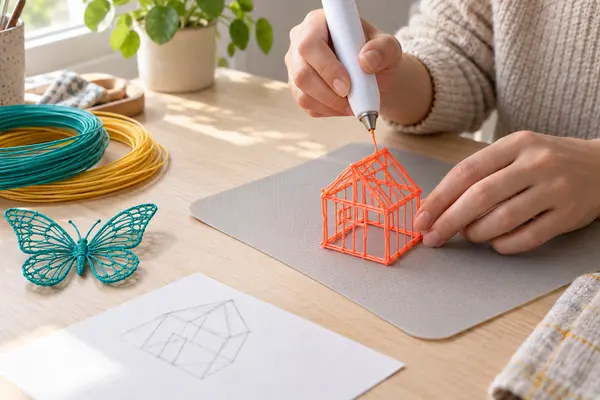
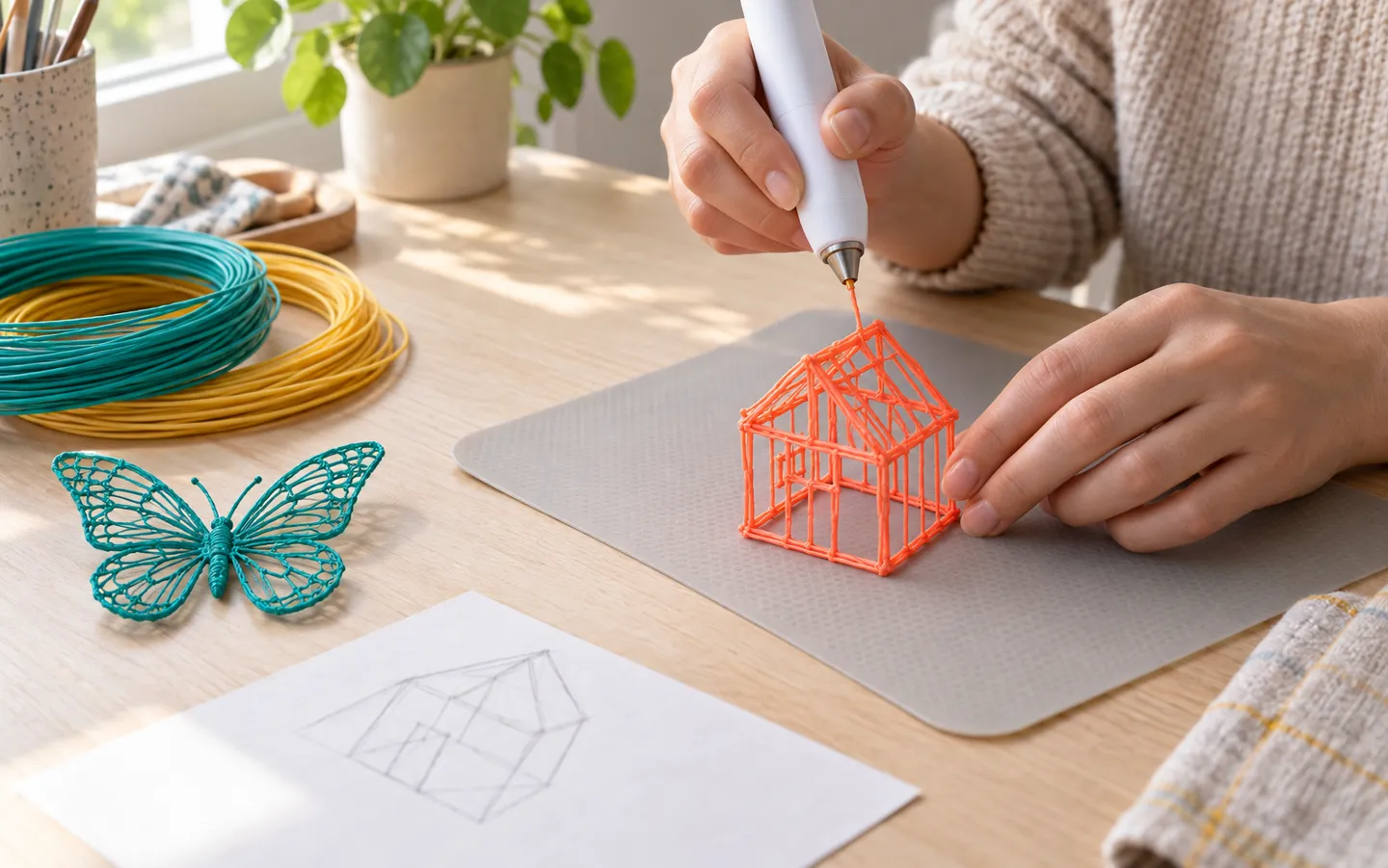
A motor feeds plastic into a heated nozzle. It comes out soft and sets within seconds, flat or in mid-air.
See the numbers doodle3dpen
3D PENS, EXPLAINED
A 3D pen is a tiny hot-plastic printer you hold in your hand.
HOT TIP about 200 °C
1 million to 10 billion Particles per gram of plastic drawn
It melts a strand of plastic at around 200 °C and lets you draw lines that stand up on their own. It also gives off fine particles and vapours, much as desktop 3D printers do. Here is what the research says, in plain English.
Plain English, with the sources linked.
THE SHORT ANSWER
Great fun for making things,
with two facts worth knowing first.
HOW IT WORKS
A motor feeds plastic into a heated nozzle. It comes out soft and sets within seconds, flat or in mid-air.
See the numbersPICK THE PLASTIC
Most pens take both. In tests, ABS gave off more particles and vapour than PLA.
Compare themGIVE IT AIR
Pens emit ultrafine particles at levels similar to workplace 3D printers, close to the face.
See the studyA QUICK FILAMENT CHECK
Pick a filament or setting to see what a 2019 NIOSH study of children’s 3D pens and printers found about its emissions.
Results are yields measured in a test chamber and modelled for rooms. They compare plastics; they are not a safety rating for any product.
BEFORE YOU DRAW
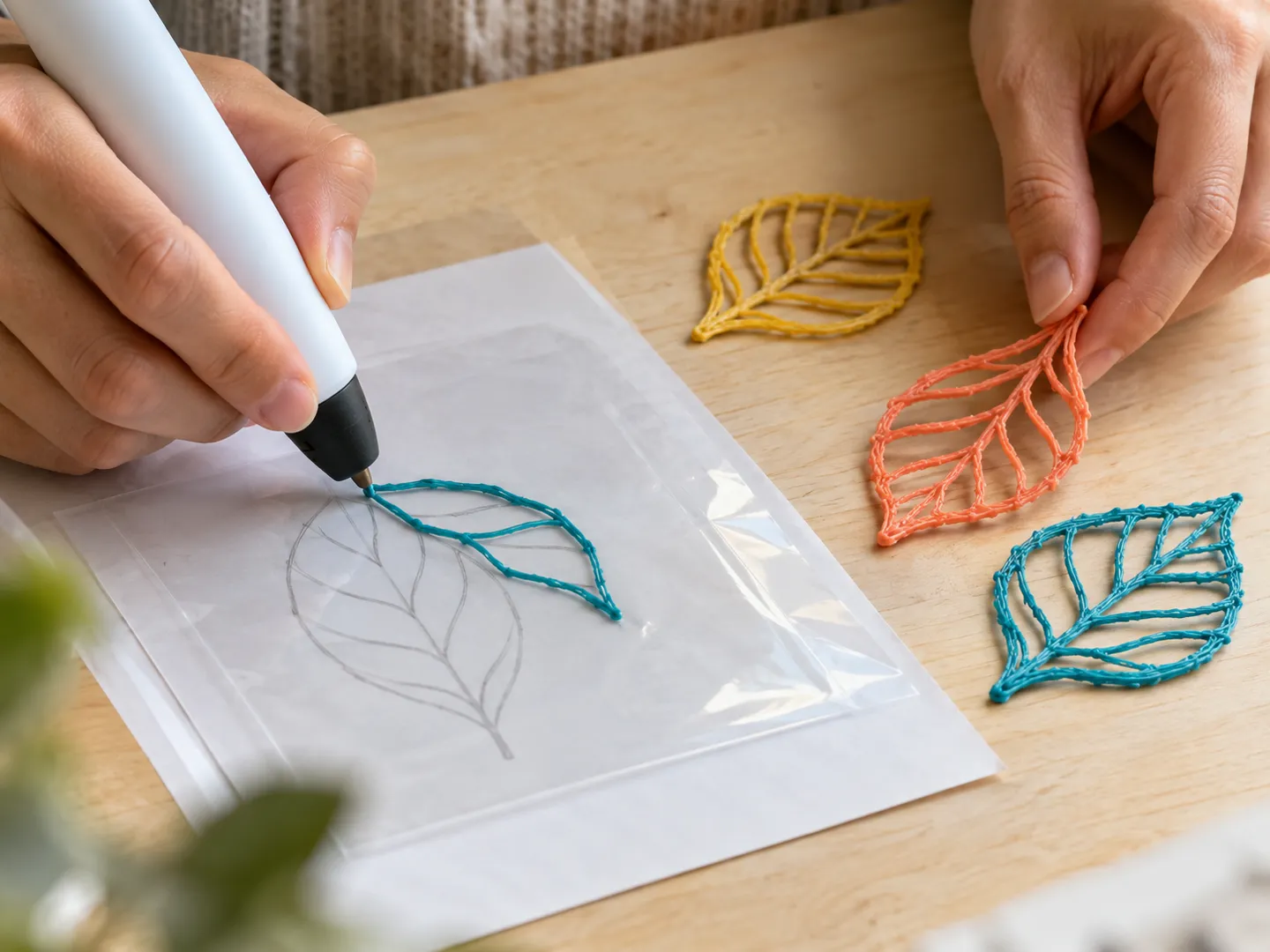
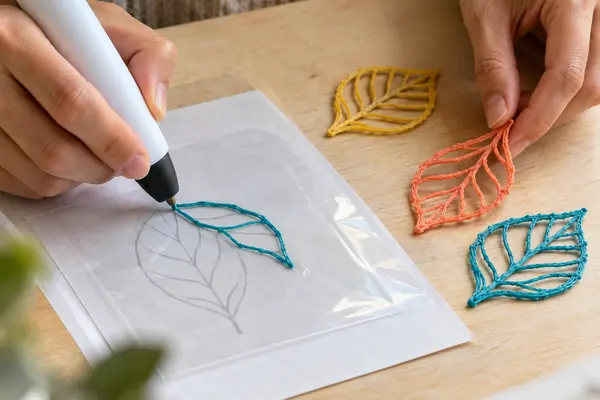
Trace a shape over a printed template, lift it off when it has cooled, and join flat pieces into 3D models.
In the studies above, PLA gave off fewer particles and less vapour than ABS.
The NIOSH researchers recommended controls where several pens run in a poorly ventilated space, and NIOSH advises ventilation for 3D printing generally.
The nozzle runs at around 200 °C. Follow the age rating and instructions that come with your pen, and switch it off when you stop.
TWO FINDINGS WORTH KNOWING
Researchers measured what comes out
of the nozzle, not just the plastic.
1 million to 10 billion
Particles per gram of plastic drawn
Toy 3D pens and a toy printer released particles of 30 to 300 nanometres, at yields similar to 3D printers used in workplaces. Dose modelling suggested they would reach deep into children’s lungs.
3D PENS · NIOSH 2019
PLA ≈ ABS ÷ 10
Modelled vapour from one toy
ABS gave the highest vapour levels, including styrene. PLA came out about an order of magnitude lower. An EPA review of 16 studies also found ABS released more particles than PLA.
PLA VS ABS · NIOSH 2019
The researchers pointed out that the nozzle is likely less than a child’s arm’s length away, which puts the source in the breathing zone. They suggested controls where several pens run in a poorly ventilated room.
PEN FACTS
The first mass-market 3D pen was crowdfunded on Kickstarter in 2013. It aimed for $30,000, raised $2.3 million and went on sale for $99.
The pens in the NIOSH study ran at about 190 to 230 °C. An early review measured the first pen heating to 464 °F, about 240 °C.
Across the toys tested, raising the nozzle to 230 °C increased the vapour yield and the size of the particles released.
The EPA describes these particles as 1 to 100 nanometres across: small enough to travel deep into the airways and hard for the body to clear.
In 2019 UL published ANSI/CAN/UL 2904, a method for measuring particle and chemical emissions from 3D printers in homes, schools and offices. Its research found more than 200 different VOCs.
QUICK QUESTIONS
Short answers to the questions people ask most.
A handheld tool that heats a strand of plastic filament and pushes it out of a hot metal nozzle. The plastic cools within seconds, so you can draw flat shapes, join them, or build lines up into the air.
Hot enough to melt plastic. In a 2019 NIOSH study, the pens tested ran at about 190 to 230 °C, and a 2013 review of the first mass-market pen reported it heating to 464 °F, about 240 °C.
Both work in most pens. In the NIOSH study, ABS gave higher particle and vapour yields than PLA, and an EPA review of 16 studies also found ABS released more particles than PLA.
Yes. Researchers measured ultrafine particles and volatile organic compounds from children’s 3D pens at levels similar to 3D printers used in workplaces. They suggested controls where several pens are used in a poorly ventilated room.
The first mass-market 3D pen was crowdfunded on Kickstarter in 2013. It asked for $30,000, raised $2.3 million and went on sale for $99.
Updated
A NAME THAT DRAWS ATTENTION
doodle3dpen.com is part of the DoodleSale portfolio. It isn't in an auction right now, but you can ask about leasing it.